Attukal Bhagavathy
Home to the world's largest gathering of women — the annual Pongala festival draws over 3 million women devotees. Listed in the Guinness World Records.
Official WebsiteHistory
The Attukal Bhagavathy temple stands in the city of Thiruvananthapuram, on the banks of the Killi river, a short way from the great Padmanabhaswamy temple. By tradition its origin lies in a vision granted to the head of the Mulluveettil family, to whom the Goddess came in the form of a young girl; the family raised her shrine on the spot she marked, and there she has been worshipped ever since as Attukal Amma. The Goddess is venerated as Bhadrakali, the fierce and protective form of the Mother, and is identified in local belief with Kannaki, the heroine of the ancient Tamil epic Silappadikaram, who is held to have passed through Attukal on her journey after the burning of Madurai. Over the centuries the temple grew from a modest family shrine into one of the most thronged in Kerala, above all through the Attukal Pongala, which has become the largest gathering of women anywhere in the world and has carried the temple's fame far beyond the state. It is administered today by the Attukal Bhagavathy Temple Trust.
Mythology & Legend
The Legend
The temple is said to have begun with a vision granted to the karanavar (elder) of the Mulluveettil family. As he sat by the Killi river he was approached by a young girl who wished to cross the water, and he helped her over and brought her to his home; but the child vanished, and that night the Goddess appeared to him in a dream, revealing that the girl had been none other than herself. She bade him build her a shrine, and told him he would find the chosen spot marked with three lines. The elder searched and found the place so marked in the Kavu (sacred grove) at Attukal, and there the first shrine was raised. The Goddess has been worshipped on that spot ever since as Attukal Amma, the Mother of Attukal, in her form as Bhadrakali, the protector of her children.
Attukal Amma and Kannaki of Silappadikaram
Attukal Bhagavathy is identified in belief with Kannaki, the heroine of the ancient Tamil epic Silappadikaram. Kannaki's husband Kovalan was wrongly accused of stealing the queen's anklet and executed by the Pandya king of Madurai. Proving his innocence by breaking open her own matching anklet before the king, the grief-stricken and wrathful Kannaki tore off her breast and flung it at the city, calling down fire that consumed Madurai, sparing only the innocent. She is held to have journeyed afterward toward Kodungallur, where she is enshrined as the great Bhagavathy of Kerala, and by tradition she rested at Attukal on the way. The ballad of Kannaki, the Thottam Pattu, is sung through the nights of the festival, and the Pongala itself is understood as the women of the land offering comfort and welcome to the Mother who suffered so greatly.
The Pongala and the Sabarimala of Women
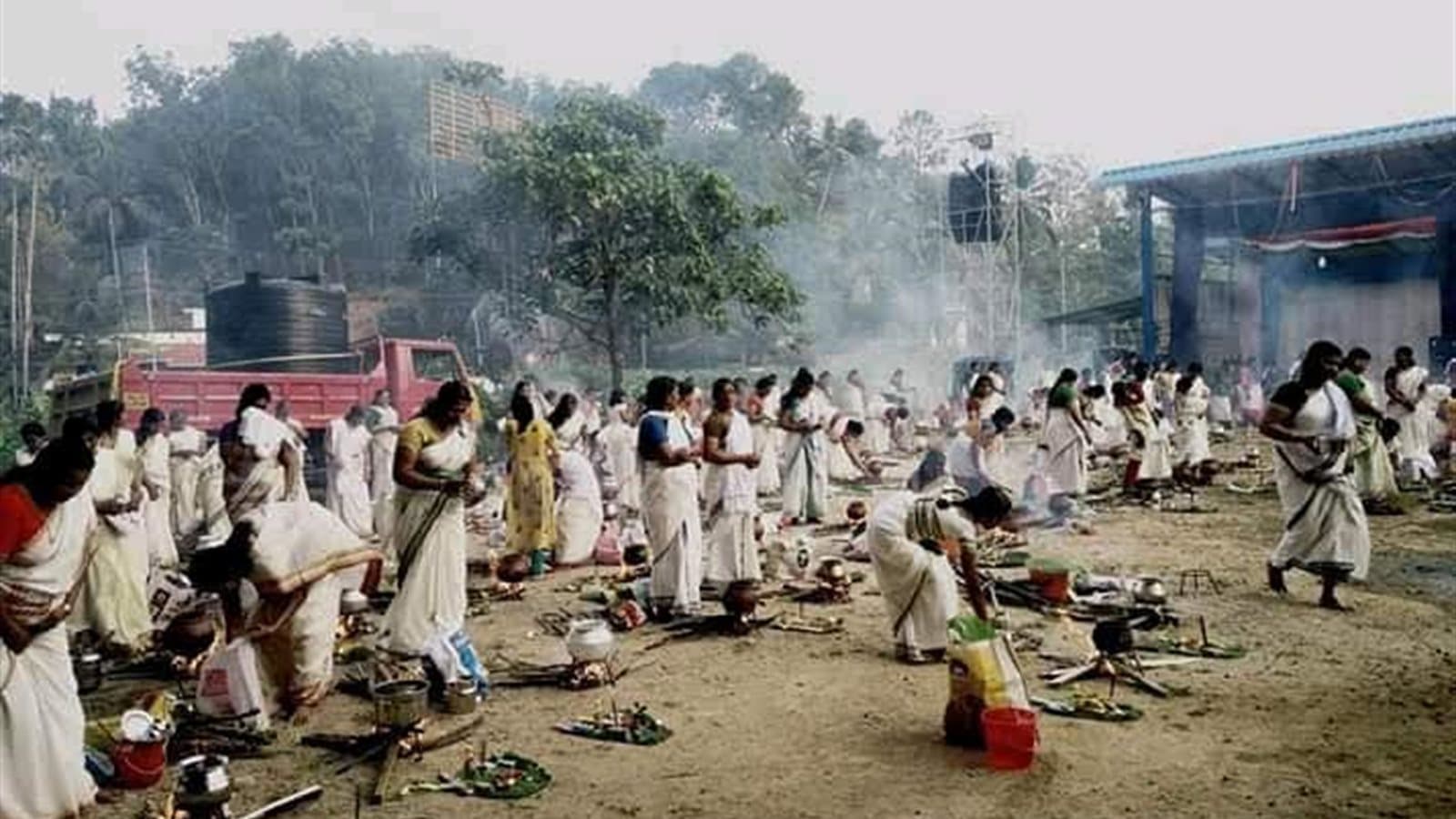
Just as Sabarimala draws men in their millions, Attukal is called the Sabarimala of Women, for the Attukal Pongala is the greatest gathering of women anywhere in the world. On the Pongala day, the climax of the ten-day festival, women come from across Kerala and beyond and set up small hearths of brick and earthen pots along the streets of the whole city, for kilometres in every direction from the temple. They cook pongala, a sweet offering of rice, jaggery and coconut, and when it is ready it is sanctified by the sprinkling of holy water carried out from the temple. The offering is an act of devotion and of thanksgiving, a prayer for the welfare of family and home, and the sight of a city given over entirely to the worship of the Mother is among the most moving in all of India.
Bhadrakali, the Protecting Mother
Attukal Amma is worshipped as Bhadrakali, the auspicious and fierce form of the Goddess born of Shiva to destroy evil, the slayer of the demon Darika in the Kerala tradition. Though fierce in aspect and armed in her iconography, she is to her devotees above all a mother, gentle and protecting toward those who come to her, and terrible only to wrongdoers. It is this union of power and tenderness that draws the women of Kerala to her in such numbers, bringing their cares and their gratitude to the Mother who watches over hearth and family.
Architecture
The temple is built in a blend of the Kerala and Tamil (Dravidian) styles. Its gopuram is richly worked with sculpture, the ten avatars of Vishnu (Dasavatharam) and scenes from the stories of the Goddess arrayed across its tiers, while the shrines themselves keep the Kerala manner, with sloping copper-clad roofs, the sopanam steps to the sanctum, the namaskara mandapam and the chuttambalam enclosure around the inner shrine. The sanctum enshrines Attukal Bhagavathy as Bhadrakali, adorned and armed in the iconography of the Mother, with subsidiary shrines to Ganapathy, Shiva, the Nagas and the guardian deities ranged within the precinct. The Killi river flows beside the temple, and during the Pongala the surrounding streets of the whole city become, in effect, an extension of the temple, lined for kilometres with the hearths of the women devotees.
Gopuram
gopuramThe richly carved main gateway, its tiers worked with the Dasavatharam (ten avatars of Vishnu) and scenes from the stories of the Goddess, blending the Kerala and Dravidian styles.
Carved with Dasavatharam & Devi stories
Sreekovil (Sanctum)
sanctumThe inner shrine enshrining Attukal Bhagavathy as Bhadrakali, adorned and armed in the iconography of the Mother, approached by the sopanam steps in the Kerala manner.
Bhadrakali in the Kerala sreekovil
Namaskara Mandapam & Chuttambalam
mandapamThe pillared hall of obeisance before the sanctum and the chuttambalam enclosure around the inner shrine, in the classic Kerala temple plan with copper-clad sloping roofs.
Subsidiary Shrines
otherThe shrines of Ganapathy, Shiva, the Nagas and the guardian deities ranged within the precinct, worshipped alongside the Mother.
The Pongala Hearths
otherNot a building but a phenomenon: on Pongala day the streets of the entire city become an extension of the temple, lined for kilometres with the brick hearths and earthen pots of millions of women cooking the offering.
City-wide hearths on Pongala day
Killi River
tankThe river flowing beside the temple, central to the founding legend of the Goddess crossing the water, where devotees bathe and which frames the sacred site.
Sub-shrines & Other Deities
Ganapathy
Lord GaneshaGanesha worshipped within the precinct for the removal of obstacles, honoured before the Mother as is the custom.
Shiva
Lord ShivaShiva venerated in the complex, the source from whom Bhadrakali is born in the Kerala tradition.
Nagaraja & the Nagas
The serpent deitiesThe Naga deities worshipped in the precinct, as is widespread in Kerala temples, for family welfare and the removal of doshas.
Guardian Deities (Madan, Yakshi)
The folk guardian spiritsThe guardian and folk deities honoured alongside the Goddess, in keeping with the devotional traditions of the region.
Highlights
- 1Home of the Attukal Pongala, the world's largest gathering of women for a religious activity, recorded in the Guinness World Records
- 2Known as the 'Sabarimala of Women' (Sthreekalude Sabarimala), the great women-centred shrine of Kerala
- 3Dedicated to Attukal Bhagavathy, the Mother worshipped as Bhadrakali and identified with Kannaki of the Tamil epic Silappadikaram
- 4The ten-day festival when millions of women cook pongala in earthen pots over open hearths lining the streets across the whole city
- 5A gopuram richly carved with the Dasavatharam and the stories of the Goddess, blending Kerala and Dravidian styles
- 6Set on the banks of the Killi river, about 2 km from the Padmanabhaswamy temple in Thiruvananthapuram
Festivals & Events
Attukal Pongala→
February–March (Kumbham)The temple's supreme festival and the world's largest gathering of women. On the ninth day of the ten-day festival, millions of women cook pongala (rice with jaggery and coconut) in earthen pots over open hearths lining the streets across the entire city, offering it to the Goddess; the fire is kindled from the temple's main hearth and spreads outward. Recorded in the Guinness World Records.
Kappukettu & Thottam Pattu
February–March (start of the festival)The festival opens with the Kappukettu ceremony and the nightly singing of the Thottam Pattu, the ballad of Kannaki, recounting the story of the Goddess over the days leading to the Pongala.
Kuthiyottam & Children's Procession
February–March (festival days)Young boys undertake the Kuthiyottam vow, a ritual offering of the body in penance to the Goddess, accompanied by colourful processions during the festival.
Navaratri
September–October (Ashwin)The nine nights of the Goddess observed with special worship and alankaram, an important season at this Devi temple.
Sevas & Poojas
Darshan of Attukal Amma
dailyWorship of the Mother as Bhadrakali in the sanctum, the central act of every devotee's visit.
Pongala Offering
specialThe cooking and offering of pongala (rice, jaggery and coconut) to the Goddess, performed by women in their millions on the Pongala day and as a vow at other times, the temple's most famous offering.
Bhagavathi Seva
specialA special worship of the Goddess performed with lamps and offerings on the devotee's behalf, a popular seva at Devi temples.
Archana & Vazhipadu
dailyOffering of worship and the various vows (vazhipadu) made to the Mother in the devotee's name and birth-star, performed by the temple priests.
Fees and timings are indicative and may change. Please confirm with the temple office before travelling.