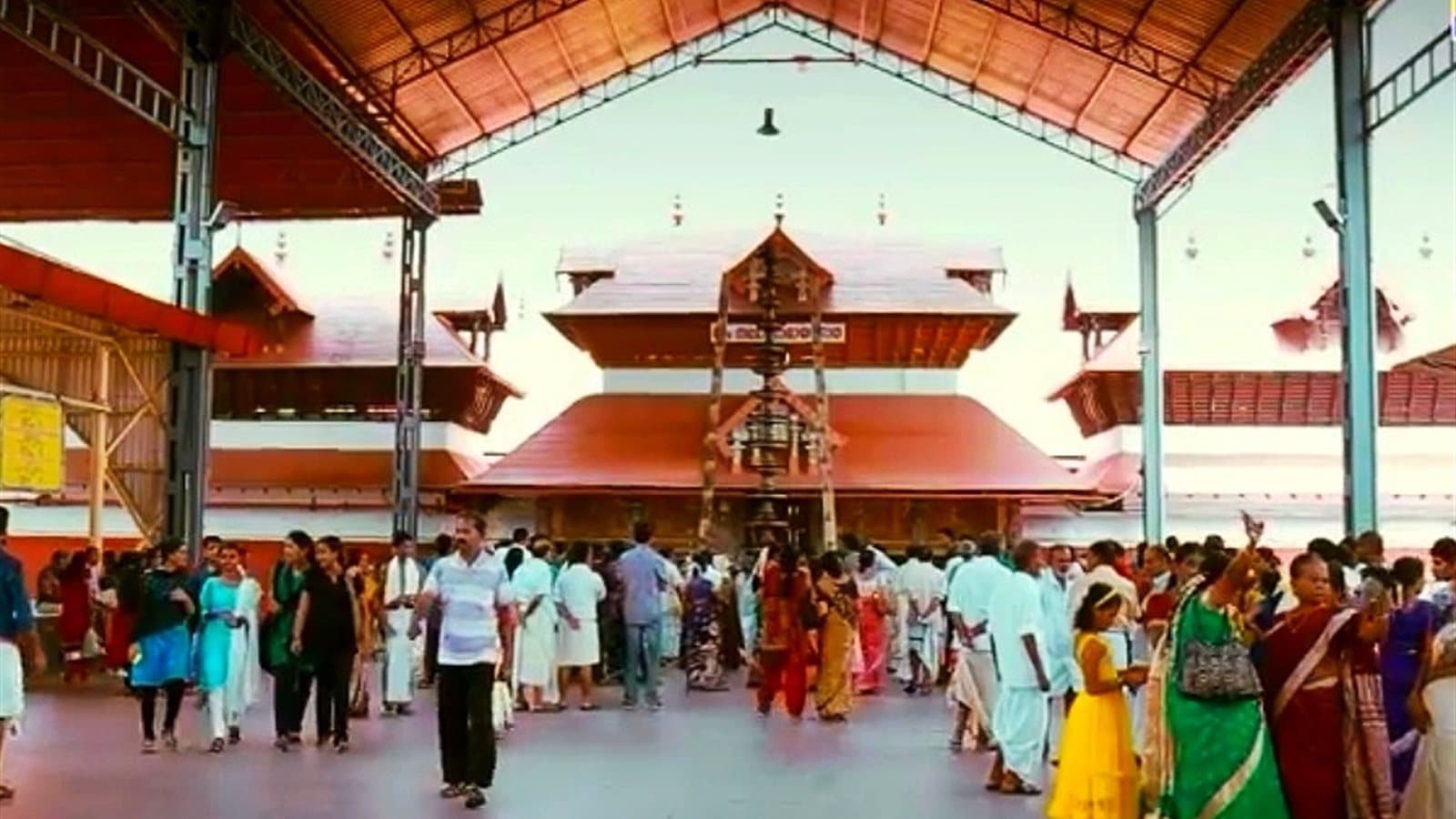
Guruvayur Sri Krishna
Known as the Dwarka of the South, this is Kerala's most important pilgrimage. The four-armed child Krishna idol is believed to be over 5,000 years old.
Official WebsiteHistory
Sree Krishna Temple at Guruvayur is the foremost Krishna shrine of Kerala and one of the most visited temples in South India. Tradition holds the deity to be extraordinarily ancient, first worshipped by Vishnu himself and passed down through Brahma, the sages, and Krishna's parents, before Krishna installed it in his city of Dwarka. When Dwarka was destined to be swallowed by the sea at the close of the Dwapara Yuga, Krishna (through his devotee Uddhava) entrusted the idol's rescue to Guru, the preceptor of the gods, and Vayu, the wind god, who bore it south and, guided by Lord Shiva, enshrined it at a lotus-filled tank where Shiva and Parvati were themselves worshipping. The place took the name of its divine founders: Guru-Vayu-ur. The temple's recorded history runs deep through the medieval period; it suffered raids and a major fire in 1970 but was rebuilt, and it flourished under the patronage of the Zamorins of Calicut and generations of devotees. It is woven into Kerala's cultural memory through the poet-saints Melpathur and Poonthanam and the temple dance-drama Krishnanattam.
Mythology & Legend
The Legend
The idol of Guruvayurappan is said to be among the most ancient of all, fashioned of the rare Patala-anjanam stone and worshipped first by Mahavishnu in Vaikuntha. It passed to Brahma, then through the sages Sutapas and the divine couple who would be reborn as Krishna's parents, and finally to Vasudeva and Devaki, in whose home Krishna was born. Krishna himself worshipped this very image in Dwarka. As his earthly mission ended and the sea prepared to claim Dwarka, Krishna told his devotee Uddhava that the idol must be saved and a new home found for it. Guru, the guru of the gods (Brihaspati), and Vayu, the wind god, recovered the image from the waters and carried it across the land seeking the right spot. Guided by Lord Shiva, they came to a beautiful lotus tank in Kerala where Shiva and Parvati were at worship. Shiva declared the place supremely holy and graciously shifted to the opposite bank so that Krishna might be installed there. The shrine was named Guru-Vayu-ur for the two who established it, and Shiva's new abode became the Mammiyur temple.
Melpathur, Poonthanam, and the Narayaneeyam
Two devotee-poets define Guruvayur's spiritual fame. Melpathur Narayana Bhattathiri, a great Sanskrit scholar, is said to have taken upon himself the paralysis of his ailing guru and, crippled, came to Guruvayur. There, on the advice of the saint-poet Thunchaththu Ezhuthachan to 'begin with the fish' (the Matsya avatar), he composed the Narayaneeyam (1,034 verses condensing the entire Bhagavata Purana), completing one canto a day for a hundred days. On the final day in 1586 the Lord granted him a vision and cured him. The other was Poonthanam Nambudiri, an unlettered but supremely devoted poet who wrote the Malayalam Jnanappana ('Song of Wisdom'). When the learned Melpathur once slighted Poonthanam's simple verses, the Lord himself is said to have rebuked him, declaring that Poonthanam's pure devotion (bhakti) was dearer to him than Melpathur's scholarship (vibhakti), a parable still cherished across Kerala.
Krishnanattam, the Lord's Own Dance-Drama
In the 17th century Manaveda, the Zamorin of Calicut and a great Krishna devotee, composed the Krishnagiti and created Krishnanattam, a cycle of eight dance-dramas depicting Krishna's life from birth to ascension. By legend Manaveda was granted a vision of the child Krishna under the elanji tree at Guruvayur. Krishnanattam is performed at the temple as a votive offering: devotees sponsor specific plays for specific blessings (the 'Swargarohanam' on the marriage of a daughter, and so on). It is regarded as a forerunner of Kerala's celebrated Kathakali.
The Elephants of Guruvayur and Keshavan
Devotees have for centuries offered elephants to the Lord, and Guruvayur maintains a large herd housed a few kilometres away at the Punnathur Kotta (Anakkotta), a former palace grounds turned elephant sanctuary. The most beloved was Guruvayur Keshavan (1904–1976), an elephant of legendary devotion and dignity who, it is said, would bow before the deity and who died on Guruvayur Ekadasi day facing the temple. His statue stands before the eastern entrance, and the herd remains central to the temple's grand festival processions and the Aanayottam races.
Architecture
Guruvayur is built in the classic Kerala temple style: a square, gold-roofed sanctum (sreekovil) set within two concentric prakaram enclosures, with the principal entrances to the east and west. The east-facing sreekovil houses the standing four-armed Mahavishnu. Before it rise two of the temple's signal landmarks: the Dwajasthambham, a flagstaff about 33.5 metres tall sheathed in gold, and the Deepasthambham, a seven-storeyed pillar carrying thirteen circular tiers of oil lamps that blaze on festival nights. The temple tank, Rudratheertham, lies to the north and is the setting for the festival Aarattu. The inner walls and the Vilakkumadam (the surrounding frame of lamps) are illuminated to spectacular effect during the chuttuvilakku. Across from Guruvayur stands the Mammiyur Mahadeva temple, where, by legend, Shiva moved to make room for Krishna, and a Guruvayur pilgrimage is traditionally completed with a visit there.
Sreekovil (Sanctum)
sanctumThe square, copper-and-gold roofed inner sanctum housing the standing four-armed Mahavishnu carved of Patala-anjanam, holding the conch (Panchajanya), discus (Sudarshana), mace (Kaumodaki) and lotus. East-facing, it is the heart of the temple; the deity is adorned freshly each session, from the bare Nirmalya darshan at dawn to full ornament through the day.
Gold-roofed · east-facing · Mahavishnu
Dwajasthambham (Gold Flagstaff)
otherThe towering flagstaff before the sanctum, about 33.5 metres tall and sheathed in gold, one of the tallest temple flagstaffs in the region. The festival flag (kodi) is hoisted on it to inaugurate the annual Utsavam.
~33.5 m · gold-plated
Deepasthambham (Pillar of Lamps)
otherA seven-storeyed lamp-pillar carrying thirteen circular tiers of oil lamps. When lit during festivals and special offerings, it becomes a blazing column of fire, among the temple's most striking sights.
7 tiers · 13 lamp-rings
Vilakkumadam & Chuttuvilakku
otherThe frame of lamps mounted along the inner prakaram walls. On Ekadasi and festival nights every wick is lit (the chuttuvilakku), ringing the sanctum in a continuous line of flame, the temple's signature illumination.
Rudratheertham
tankThe temple's sacred tank to the north, named for Shiva (Rudra), who by legend worshipped here before yielding the site to Krishna. It is the destination of the festival Aarattu, the ceremonial bath of the deity that closes the Utsavam.
Koothambalam & East/West Gopurams
mandapamThe temple's performance hall (Koothambalam) and its eastern and western gateway towers. The Koothambalam and the area before the eastern gopuram host the daily Krishnanattam and other votive arts.
Sub-shrines & Other Deities
Ganapathy
Lord GaneshaThe obstacle-remover, worshipped first by devotees as they enter, with his shrine within the temple precinct.
Sastha (Ayyappa)
Lord Ayyappa / Dharma SasthaA shrine to Sastha within the complex, connecting Guruvayur to the broader Kerala devotional fabric centred on Sabarimala.
Bhagavathy / Edathedathu Kavil
The GoddessThe Devi shrine associated with the temple, worshipped by devotees for protection and family welfare alongside the principal deity.
Mammiyur Mahadeva (across the road)
Lord ShivaThough a separate temple opposite Guruvayur, Mammiyur is bound to it by legend, the abode to which Shiva moved to give Krishna the holy site. A Guruvayur pilgrimage is traditionally held incomplete without darshan here.
Highlights
- 1Kerala's most important Krishna pilgrimage, revered as 'Bhuloka Vaikunta' (Vishnu's earthly abode) and the 'Dwarka of the South'
- 2The four-armed deity Guruvayurappan holds the conch, discus, mace and lotus, the very form of Mahavishnu that Krishna revealed to his parents at birth
- 3The idol is carved from the rare and sacred 'Patala-anjanam', a black stone considered far more than ordinary stone
- 4Installed, by legend, by Guru (Brihaspati, preceptor of the gods) and Vayu (the wind god), whose names give the town its name
- 5Birthplace of the Narayaneeyam, the 1,034-verse devotional masterpiece composed here by Melpathur Narayana Bhattathiri in 1586
- 6Home to a long tradition of temple elephants, housed at the Punnathur Kotta sanctuary nearby, the legendary Guruvayur Keshavan among them
- 7A 33.5-metre gold-plated flagstaff (Dwajasthambham) and a seven-tiered pillar of lamps (Deepasthambham) frame the sanctum
Festivals & Events
Guruvayur Ekadasi
November–December (Vrishchikam)The temple's holiest day, commemorating Krishna's delivery of the Bhagavad Gita. The night blazes with the chuttuvilakku illumination and an Udayasthamana pooja; the preceding day features the famous Aanayottam (elephant race), and the Ekadasi Vilakku procession is a vast draw.
Utsavam
February–March (Kumbham)The grand ten-day annual festival, opening with the Aanayottam elephant race and the Kodiyettam (flag hoisting) and closing with the Aarattu, when the deity is taken in procession to the Rudratheertham tank for a ceremonial bath.
Ashtami Rohini (Krishna Janmashtami)
August–SeptemberThe birthday of Lord Krishna, celebrated with great devotion, special abhishekams, the Uriyadi (pot-breaking) and offerings, marking the advent of the Lord whose form the deity embodies.
Kuchela Dinam
December–January (Dhanu)Commemorates the poor devotee Kuchela (Sudama), Krishna's childhood friend, who offered a humble handful of beaten rice (aval) and was blessed with abundance, a celebration of devotion above wealth. Aval is offered at the temple.
Sevas & Poojas
Nirmalya Darshanam
dailyThe first and most coveted darshan of the day, when the sanctum opens to reveal the Lord still adorned with the previous night's flowers and sandal, before the day's fresh decoration, considered an especially blessed sight.
Thulabharam
specialThe devotee is weighed on a great balance against an offering (bananas, sugar, jaggery, coconuts or even gold) equal to their own weight, the offering then given to the Lord. A classic Guruvayur vow for fulfilment of prayers.
Udayasthamana Pooja
specialA grand 'dawn-to-dusk' worship in which the full cycle of the day's poojas is sponsored by a single devotee or family, among the most elaborate and sought-after offerings, booked long in advance.
Choroonu (Annaprasanam)
specialThe first feeding of cooked rice to an infant, performed in the Lord's presence as an auspicious beginning to the child's life; Guruvayur is one of the most popular venues in Kerala for this rite.
Krishnanattam Offering
specialSponsorship of a Krishnanattam play as a votive offering, each of the eight episodes traditionally sought for a particular blessing (e.g. Swayamvaram for marriage, Kaliyamardanam for relief from troubles).
Tholappoli / Ezhuthiniruthu (Vidyarambham)
specialInitiation of children into learning, traditionally performed at Guruvayur on Vijayadasami, when the child writes the first letters guided into the rice, a deeply popular start to formal education.
Fees and timings are indicative and may change. Please confirm with the temple office before travelling.