Sabarimala Ayyappa
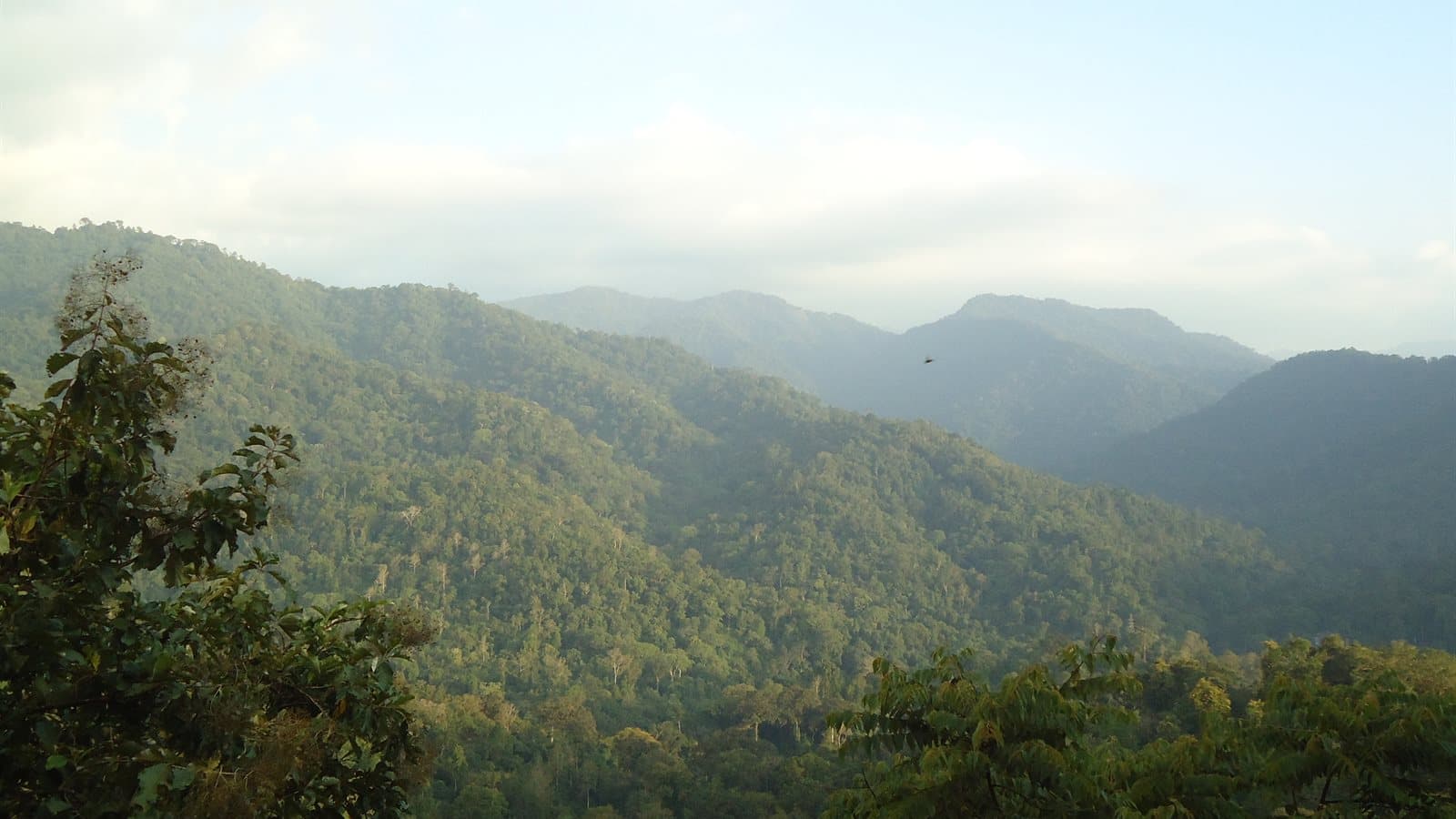
A forest hilltop shrine reachable only on foot. One of the largest annual pilgrimages in the world, with over 50 million devotees visiting during the Mandala-Makaravilakku season.
Official WebsiteHistory
Sabarimala is the forest shrine of Lord Ayyappa, also called Dharma Sastha, a deity venerated as Hariharaputra, the son of Hari (Vishnu in his Mohini form) and Hara (Shiva). The hill is named for Sabari, the elderly devotee of the Ramayana who awaited Rama in these forests. The shrine's roots are ancient, woven through the history of the Pandalam royal family, who by tradition raised Ayyappa as the prince Manikandan and to whom the Thiruvabharanam (sacred ornaments) still belong. After a fire in 1950 the sanctum was rebuilt and the panchaloha idol reconsecrated. The temple is administered by the Travancore Devaswom Board. What distinguishes Sabarimala above all is its ethos: pilgrims of every caste, class and religion observe the same vratham, wear the same austere black, and are addressed alike as 'Swami', a living embodiment of the Mahavakya 'Tatvamasi'.
Mythology & Legend
The Legend
When the demoness Mahishi, sister of the slain Mahishasura, won a boon that she could be killed only by a child born of both Shiva and Vishnu, the devas turned to the two great gods. Vishnu took the enchanting female form of Mohini, and from his union with Shiva was born a radiant boy bearing a golden bell (mani) around his neck. The infant was left on the banks of the river Pampa, where the childless King Rajasekara of Pandalam found and adopted him, naming him Manikandan. The prince grew into a being of miraculous power and wisdom. When a court intrigue sent him into the forest to fetch tigress's milk for the queen, he returned riding a tigress, and his divinity could no longer be hidden. Manikandan asked the king to build a temple where his arrow fell, at Sabarimala, then shot his arrow, ascended the hill, and merged into the idol of Dharma Sastha, seated forever in yogic stillness facing the eighteen steps.
The Divine Wedding
Ayyappa is a Naishtika Brahmachari, an eternal celibate ascetic, so Sabarimala has no celestial-wedding festival. Instead the lore tells of Malikappurathamma, the goddess in the adjacent shrine, who longs to marry Ayyappa. He promised he would wed her only in the year no Kanni-Swami (a first-time pilgrim) comes to him. Since first-timers arrive every single year, the marriage is forever deferred, and her unfulfilled waiting is honoured in her own sannidhi beside his.
The 41-Day Vratham and the Irumudi
A pilgrim becomes an Ayyappan by taking the mala, a string of tulsi or rudraksha beads, and observing 41 days of vratham: celibacy, vegetarian or sattvic food, no alcohol, sleeping on the floor, walking barefoot, controlling anger and speech, and treating every other pilgrim as Ayyappa himself. The penance dissolves rank and ego; a labourer and a millionaire walk identically clad in black. At its end the pilgrim packs the irumudi kettu, a two-pouch cloth bundle carried on the head. The front holds offerings, above all the mudra-coconut filled with ghee for the Neyyabhishekam; the rear holds personal provisions for the trek. No one may climb the eighteen steps without an irumudi on the head.
Vavar, the Companion of Ayyappa
Among Ayyappa's closest companions in the war against Mahishi's forces was Vavar, by tradition a Muslim warrior and saint. At Erumeli, where the trek traditionally begins, pilgrims worship at both the Vavar mosque and the Sastha temple before setting out, and a shrine to Vavar (Vavaru Swami) stands beside Ayyappa's own at the Sannidhanam. This shared veneration makes Sabarimala one of India's most powerful living symbols of Hindu–Muslim harmony.
The Eighteen Steps (Pathinettam Padi)
The eighteen gold-clad steps are themselves divine and are worshipped. The most common interpretation reads them as the obstacles the soul must transcend: the first five as the five senses (indriyas), the next eight as the eight ragas or passions (kama, krodha, lobha, moha, mada, matsarya, asuya, dambha), the next three as the three gunas (sattva, rajas, tamas), and the final two as vidya and avidya, knowledge and ignorance. Having shed all eighteen, the pilgrim stands before the deity as pure consciousness, realising 'Tatvamasi', That Thou Art.
Makara Jyothi and the Light at Ponnambalamedu
On Makara Sankranti (14 January), as dusk falls, devotees at the Sannidhanam turn toward the distant hill of Ponnambalamedu to behold the Makaravilakku, a sacred light that appears three times, while overhead the Makara Jyothi star rises. The moment coincides with the adorning of the idol in the Thiruvabharanam, the golden ornaments carried on foot in procession from the Pandalam palace. For the assembled millions chanting 'Swamiye Saranam Ayyappa', it is the supreme darshan of the season.
Architecture
Unlike the grand Dravidian temples, Sabarimala is a deliberately austere forest shrine. Its heart is the Sreekovil (sanctum) atop the Pathinettam Padi, the eighteen sacred, now gold-plated, steps. Within the copper-roofed sanctum the idol of Ayyappa is seated in a yogic posture, the right hand in chin-mudra, a band (yogapatta) around the drawn-up knee. The Sannidhanam plateau around the sanctum holds the flagstaff (kodimaram), the Malikappuram shrine of the goddess, and shrines to Ayyappa's companions Kaduthaswami and Vavar. The true 'architecture' of Sabarimala, devotees say, is the pilgrimage itself, the river bath at Pamba, the climb up Neelimala, and the ascent of the eighteen steps.
Pathinettam Padi (The 18 Holy Steps)
otherபதினெட்டாம் படி
The eighteen sacred steps leading to the Sreekovil, now clad in gold (panchaloha) and themselves objects of worship. Only a pilgrim carrying the irumudi kettu on the head may ascend them; each step is venerated as a stage in shedding the senses, passions, gunas, and finally knowledge and ignorance, until the soul realises 'Tatvamasi'.
18 gold-plated steps · irumudi required to climb
Sreekovil (Sanctum)
sanctumThe copper-roofed inner sanctum atop the eighteen steps, housing the panchaloha idol of Ayyappa as Dharma Sastha. The deity is seated in a yogic posture, the right hand in chin-mudra, a yogapatta band around the drawn-up knee, gazing eternally down the eighteen steps. The present idol was consecrated after the 1950 fire.
Ayyappa in yogic posture · reconsecrated 1950
Sannidhanam Plateau
otherThe temple plateau around the sanctum at roughly 1,260 m, holding the flagstaff (kodimaram), the offering platforms, the shrines of the goddess and Ayyappa's companions, and the spaces where lakhs of pilgrims gather, especially for Makaravilakku. Everything here is reached only on foot.
Malikappuram Shrine
otherThe shrine of the goddess Malikappurathamma, a short distance from the main sanctum, with its own ritual life, including the nightly procession and the lore of her eternal wait to wed the celibate Ayyappa. A major focus of devotion in its own right.
Pamba & Neelimala Ascent
otherPamba, on the holy river of the same name, is the principal base camp where pilgrims bathe before the climb. From here the path rises steeply up Neelimala and through forest to the Sannidhanam, about 5 km, the final and most demanding stretch of the journey.
~5 km forest trek from Pamba
Ponnambalamedu
otherThe distant forested hill, visible from the Sannidhanam, where the sacred Makaravilakku light appears on the evening of 14 January. Access is restricted; for pilgrims it is a point of darshan across the valley rather than a place to visit.
Sub-shrines & Other Deities
Malikappurathamma
The Goddess of SabarimalaThe presiding goddess whose shrine stands near the main sanctum. By legend she waits to marry Ayyappa in the year no first-time pilgrim (Kanni-Swami) arrives, a wait renewed every season. Her nightly rituals and procession are central to the Sabarimala experience.
Vavaru Swami (Vavar)
Ayyappa's Muslim companion-saintA shrine to Vavar, the warrior-saint who fought alongside Ayyappa. Worshipped by all pilgrims, together with the Vavar mosque at Erumeli, as an enduring symbol of inter-faith harmony.
Kaduthaswami
Guardian companion of AyyappaA guardian deity and companion of Ayyappa, with a shrine at the Sannidhanam where pilgrims pay respects on arrival.
Ganapathi
Lord GaneshaThe remover of obstacles, worshipped at the outset so the arduous trek and darshan proceed without hindrance.
Nagaraja
The Serpent GodA serpent shrine within the complex, reflecting the forest sanctity of the hill and the older nature-worship strata that underlie the Sastha tradition.
Highlights
- 1Shrine of Lord Ayyappa (Dharma Sastha), Hariharaputra, born of Shiva and Vishnu (as Mohini)
- 2Among the largest annual pilgrimages on earth, over 50 million devotees in the two-month season
- 3The 41-day vratham, the most demanding fast-and-discipline observance in the Hindu calendar; all pilgrims are equal and called 'Swami'
- 4Pathinettam Padi: 18 gold-plated holy steps, climbable only while carrying the irumudi kettu
- 5Makaravilakku & Makara Jyothi (14 January), the sacred light at Ponnambalamedu and the Thiruvabharanam procession from Pandalam
- 6A forest hilltop shrine inside the Periyar Tiger Reserve, reachable only on foot
- 7'Tatvamasi' ('That Thou Art'), the Upanishadic Mahavakya inscribed at the shrine; radical inclusivity across caste and religion
Festivals & Events
Mandala Pooja→
November–DecemberConcludes the 41-day Mandala season (which opens on the first of Vrischikam, ~17 Nov). The deity is adorned and a grand deeparadhana performed; the vast majority of pilgrims time their trek to this period.
Makaravilakku→
14 January (Makara Sankranti)The spiritual climax: the Makara Jyothi star is sighted and the sacred Makaravilakku light appears thrice at Ponnambalamedu, while the Thiruvabharanam ornaments arrive in procession from Pandalam to adorn the idol.
Petta Thullal (Erumeli)
During seasonAn ecstatic ritual dance performed by pilgrims at Erumeli, re-enacting the warriors' hunt for the demoness Mahishi. Pilgrims smear themselves with colour and dance to 'Swamiye Saranam Ayyappa' before continuing the trek.
Vishu
AprilThe Malayalam New Year, one of the few occasions outside the main season when the temple opens, with the Vishukkani arrangement before the deity.
Sevas & Poojas
Neyyabhishekam
dailyThe defining ritual of the pilgrimage: the idol is anointed with the ghee carried in the pilgrim's own mudra-coconut from the irumudi. The emptied coconut shells are then offered into the sacred fire. Performed in the early morning during season.
Udayasthamana Pooja
specialA full day of poojas sponsored from sunrise to sunset in the devotee's name, among the most sought-after sevas, with a long advance waiting list.
Padi Pooja
specialWorship of the eighteen holy steps themselves, performed on select nights when the steps are closed to climbers and ritually adorned. Booked years in advance.
Kalabhabhishekam
specialAnointing of the idol with sandalwood paste (kalabham), cooling and fragrant, offered on special days.
Pushpabhishekam
specialThe idol is covered entirely in flowers, a spectacular darshan offered on select occasions during the season.
Aravana & Appam Prasadam
dailyThe famous prasadams of Sabarimala, Aravana (a sweet rice-jaggery payasam) and Appam, prepared at the temple in vast quantities and carried home by pilgrims. Sold in sealed tins at the Sannidhanam.
Harivarasanam
dailyNot a paid seva but the day's tender close: the Harivarasanam lullaby is sung as the lamps are dimmed and the sanctum doors shut for the night, putting Ayyappa to sleep.
Fees and timings are indicative and may change. Please confirm with the temple office before travelling.