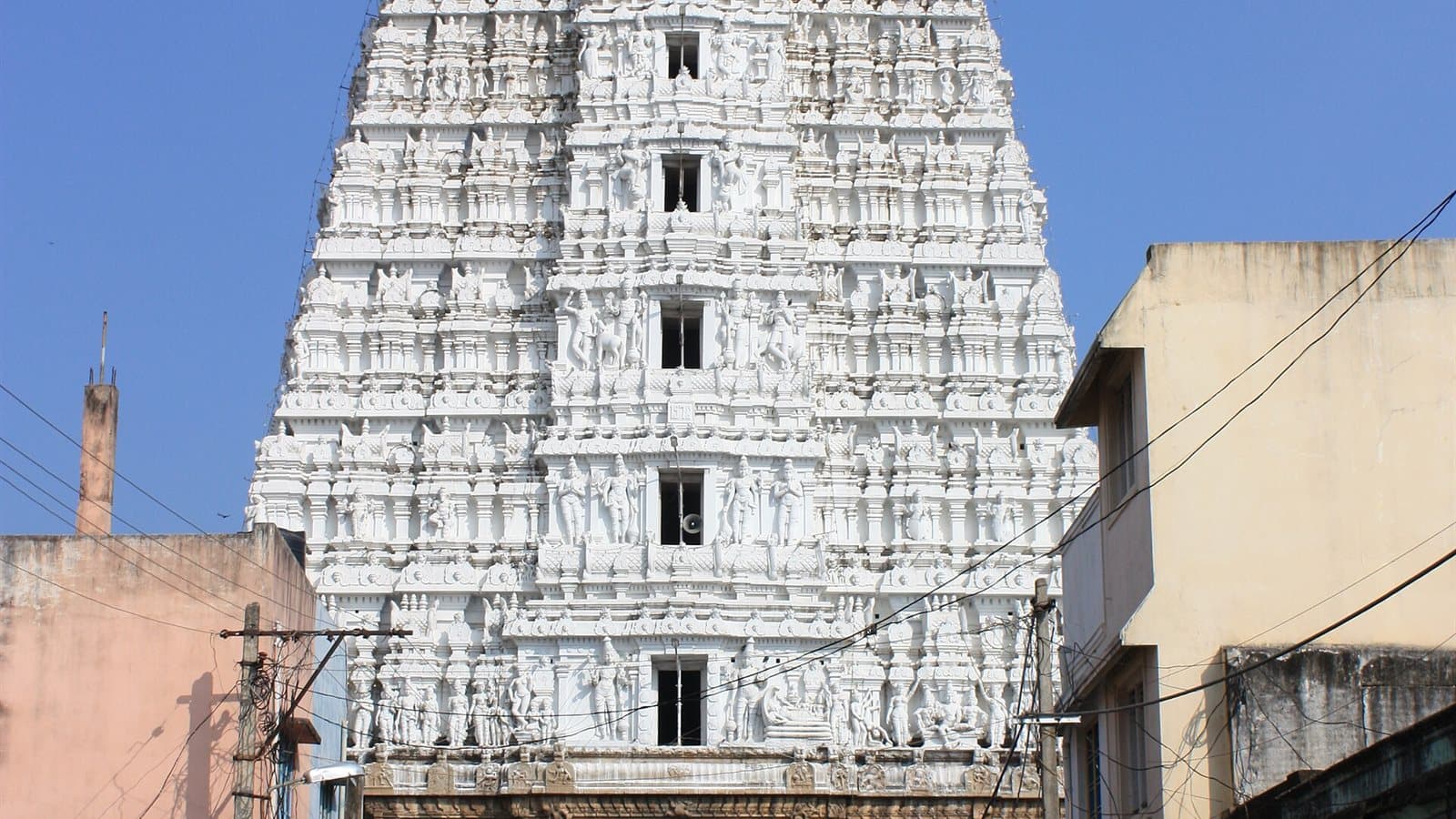
Govindarajaswamy Temple
A grand Vaishnava temple at the foothills of Tirumala, believed to be the elder brother of Tirupati Venkateswara. One of the 108 Divya Desams.
Official WebsiteHistory
The Govindarajaswamy temple stands at the heart of Tirupati, the base town for the great pilgrimage to Tirumala, and is its most important temple. Its consecration is credited to Sri Ramanuja, the eleventh- and twelfth-century philosopher of the Vishishtadvaita school, who is said to have installed Govindaraja here in 1130 CE. The deity is closely linked to the Govindaraja Perumal of Chidambaram: by tradition, when the reclining Vishnu was removed from the Chidambaram temple during a period of sectarian persecution, Ramanuja re-established the worship of Govindaraja at Tirupati, giving the growing temple town its presiding Vaishnava shrine. Around it the lower town of Tirupati developed, and for centuries it has served as the temple where pilgrims worship before ascending to, or after returning from, Lord Venkateswara on the Tirumala hills. Today it is administered by the Tirumala Tirupati Devasthanams along with the hill temple, and its complex also houses the Sri Venkateswara Museum.
Mythology & Legend
The Legend
Govindaraja is beloved at Tirupati as the elder brother of Lord Venkateswara of Tirumala. When Srinivasa (Venkateswara) descended to the Venkata hills and was to wed Princess Padmavathi, he had no wealth for so grand a celestial wedding and borrowed an enormous sum from Kubera, the lord of riches. It fell to his elder brother Govindaraja to arrange the wedding and to keep the accounts of all that was spent and owed. So great was the labour of managing his younger brother's marriage that Govindaraja, exhausted, lay down to rest, and he reclines still in yoga nidra upon the serpent Adisesha, watching over the affairs of the family. This is why the Lord at Tirupati town is worshipped in the sleeping posture, the tireless elder brother resting after his work, while Venkateswara stands on the hill above receiving the wealth that settles the debt.
Ramanuja and the Govindaraja of Chidambaram
The deity is bound by tradition to the Govindaraja Perumal of Chidambaram, where Vishnu reclines in the same complex as Nataraja, making Chidambaram (as Thillai Chithrakoodam) one of the 108 Divya Desams. By the account preserved in the Vaishnava tradition, during a time of sectarian conflict the reclining image of Govindaraja was removed from Chidambaram. The great acharya Sri Ramanuja, champion of the Vishishtadvaita faith, then established the worship of Govindaraja at Tirupati, consecrating the temple in 1130 CE and giving the pilgrim town its presiding Vishnu shrine. The temple has remained ever since a centre of the Sri Vaishnava tradition that Ramanuja shaped.
The Temple at the Foot of the Hills
Tirupati town grew around the Govindarajaswamy temple, at the foot of the seven hills crowned by Tirumala. For the countless pilgrims who come to see Lord Venkateswara, Govindaraja is the Lord of the town below, and it is the custom of many to worship him before climbing to the hill and again on returning. As the elder brother who keeps the household and its accounts, he is felt to preside over the worldly affairs of the pilgrimage, while his younger brother grants the great darshan above. The two temples, now both under the Tirumala Tirupati Devasthanams, are worshipped as one family.
Architecture
The temple is built in the Dravidian style, dominated by its tall, ornate Rajagopuram, one of the most recognisable landmarks of Tirupati town, rising in tiers above the streets beside the railway station. Within, the sanctum enshrines Lord Govindaraja in the bhujanga sayana posture, reclining at full length upon the coils of the serpent Adisesha, a large and serene image worshipped as the elder brother of Venkateswara. The complex holds separate shrines for the Goddess Pundarikavalli Thayar, for Andal, for Sri Krishna as Parthasarathy, and for the acharya Sri Ramanuja, set around pillared mandapams and prakaram corridors in the manner of a great Vaishnava temple. The Sri Venkateswara Museum within the precinct displays sculpture, temple art and the history of the Tirumala-Tirupati shrines, and the temple maintains its own kalyana mandapam and halls for festivals and the daily round of worship.
Rajagopuram
gopuramThe towering, richly carved main gateway that rises in tiers over the temple and is one of the great landmarks of Tirupati town, standing beside the railway station and visible across the lower town.
Landmark gateway of Tirupati town
Garbhagriha (Govindaraja)
sanctumThe sanctum enshrining Lord Govindaraja reclining at full length on the coils of the serpent Adisesha (bhujanga sayana), worshipped as the elder brother of Venkateswara resting after arranging his wedding.
Reclining Vishnu on Adisesha
Pundarikavalli Thayar Shrine
otherThe shrine of the Goddess Pundarikavalli (Lakshmi), consort of Govindaraja, with her own worship and festivals within the complex.
Parthasarathy (Krishna) Shrine
otherThe shrine of Sri Krishna as Parthasarathy within the temple, where Krishna Janmashtami and related festivals are celebrated.
Ramanuja Shrine
otherThe shrine honouring Sri Ramanuja, the acharya who consecrated the temple, reflecting its place in the Sri Vaishnava tradition.
Sri Venkateswara Museum
otherThe TTD museum within the temple complex, displaying sculpture, temple art, ritual objects and the history of the Tirumala and Tirupati shrines.
Temple art & history museum
Mandapams & Prakarams
mandapamThe pillared halls and circumambulatory corridors of the complex, used for the daily worship, festival processions and the gathering of pilgrims.
Sub-shrines & Other Deities
Pundarikavalli Thayar
Goddess Lakshmi, consort of GovindarajaThe principal Goddess of the temple, worshipped for prosperity and grace, with her own shrine and festivals.
Andal
Andal (Goda Devi), the Alvar saint-poetessThe only woman among the twelve Alvars, worshipped as a consort of Vishnu, honoured with her own shrine and the recitation of her Tiruppavai.
Parthasarathy (Krishna)
Lord Krishna as the charioteer of ArjunaSri Krishna enshrined in the complex, worshipped especially at Janmashtami and through the festival calendar.
Ramanuja
Sri RamanujacharyaThe acharya who established the temple's worship, venerated within the precinct as the founder of the Sri Vaishnava tradition here.
Highlights
- 1The principal temple of Tirupati town, enshrining Lord Govindaraja in the reclining posture on the serpent Adisesha
- 2Revered as the elder brother of Lord Venkateswara of Tirumala, who reclines in yoga nidra after arranging his younger brother's celestial wedding
- 3Consecrated by the great Vaishnava acharya Sri Ramanuja in 1130 CE; tied to the Govindaraja Perumal of Chidambaram (the Thillai Chithrakoodam Divya Desam)
- 4A towering Rajagopuram that is one of the great landmarks of Tirupati, rising beside the railway station
- 5Houses the Sri Venkateswara Museum of temple art and history, maintained by the TTD
- 6Shrines to Pundarikavalli Thayar, Andal, Sri Krishna (Parthasarathy) and the acharya Ramanuja within the complex
- 7Administered by the Tirumala Tirupati Devasthanams (TTD), with free annadanam for pilgrims
Festivals & Events
Annual Brahmotsavam
Varies (festival season)The grand annual festival of the temple, when Govindaraja is taken in procession through the streets of Tirupati on a succession of vahanas, with the great Rathotsavam (car festival) and Garuda Seva drawing large crowds.
Vaikunta Ekadasi→
December–January (Margazhi)The sacred Vaishnava day when the Vaikunta Dwaram (Gate of Heaven) is opened and devotees pass through it for darshan, observed with fasting and special worship.
Sri Krishna Janmashtami
August–September (Shravana)The birth of Krishna celebrated at the Parthasarathy shrine with night worship, alankaram and festivities.
Sri Rama Navami
March–April (Chaitra)The birth of Lord Rama observed with special poojas and recitation, a major festival in the Vaishnava calendar of the temple.
Sevas & Poojas
Darshan of Sri Govindaraja
dailyWorship of Lord Govindaraja reclining on Adisesha, the central darshan for every pilgrim, with free and special-entry queues arranged through the TTD.
Archana & Sahasranamarchana
dailyOffering of worship and the recitation of the Lord's thousand names in the devotee's name and birth-star, performed by the temple priests.
Kalyanotsavam
specialThe symbolic celestial wedding of the Lord and Goddess, performed on the devotee's behalf, a popular sponsored seva in TTD temples.
Annadanam (Free Meals)
dailyFree meals served to pilgrims as the prasad of the Lord, in keeping with the annadanam tradition of the TTD temples.
Fees and timings are indicative and may change. Please confirm with the temple office before travelling.