Overview
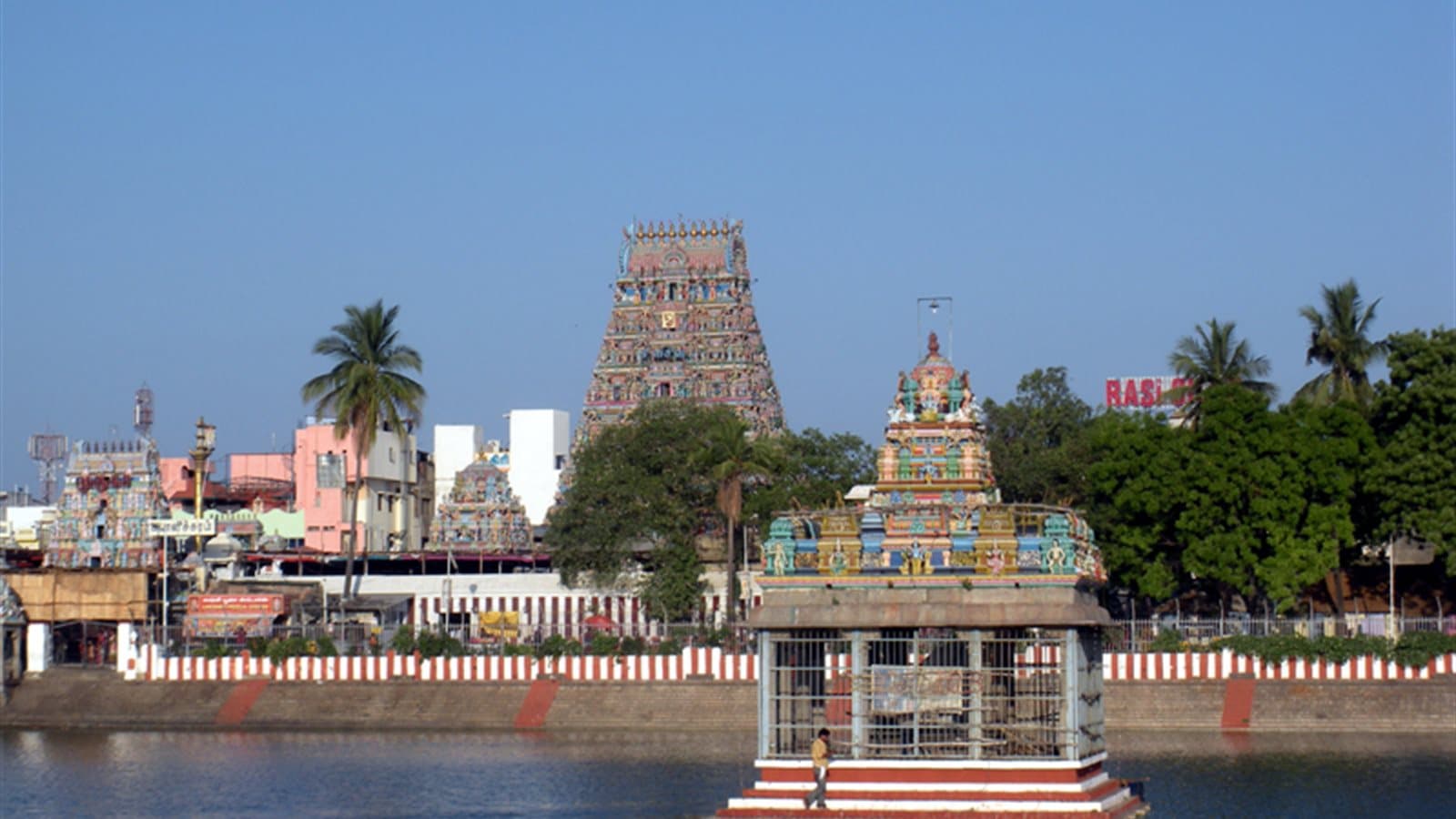
Maha Shivaratri — the 'Great Night of Shiva' — is among the most widely observed festivals in the Hindu calendar, marked at every Shaivite temple in India and by tens of millions of Shiva devotees in their homes. It falls on the fourteenth night of the dark fortnight (Krishna Chaturdashi) of the Tamil month of Masi (February–March). Unlike most festivals, which are celebrated by day, Shivaratri is observed through the night — with fasting, all-night vigil, and four prahara abhishekams performed in sequence from dusk to dawn.
Significance
Maha Shivaratri commemorates several interconnected events in Shaiva tradition: the marriage of Shiva to Parvati; the night of Shiva's cosmic dance (the Lasya-Tandava); the night Shiva swallowed the halahala poison emerging from the churning of the ocean, holding it in his throat to save the world; and, in some traditions, the night Shiva first manifested as the infinite Lingodbhava pillar. The vrat itself — the all-night fast and vigil — is considered the single most efficacious act in the Shaivite calendar, said to grant the merit of all the year's daily worship combined.
The Story Behind the Festival
When the devas and asuras churned the cosmic ocean for amrita (the nectar of immortality), the first thing to emerge was not nectar but halahala — a poison so virulent it threatened to destroy all creation. Brahma and Vishnu were helpless. They turned to Shiva, who calmly accepted the poison into his throat — but Parvati, terrified, clasped his neck to prevent it descending into his stomach (which contained all the worlds). The poison was held forever in his throat, turning it blue: hence Shiva's name Neelakanta, 'the blue-throated one'. The devas kept vigil through the night while Shiva sat in trance, holding the poison. That night of vigil — when the world hung between life and death — is the night re-enacted by every Shaiva devotee on Maha Shivaratri.
Rituals & Observances
- Devotees fast through the day (water, milk, fruit only; no rice or grains) and stay awake through the night.
- Four prahara abhishekams are performed at temples through the night — each three hours apart, beginning around 6 PM and ending at dawn.
- First Prahara (~6 PM): abhishekam with milk · Second (~9 PM): with curd · Third (~midnight): with ghee · Fourth (~3 AM): with honey.
- Devotees chant 'Om Namah Shivaya' continuously through the night; Shiva Sahasranamam, Sri Rudram and the Lingashtakam are recited.
- Bilva (bel) leaves are the prescribed offering — each leaf has three lobes representing the three eyes of Shiva and the three gunas; offering them on Shivaratri is considered exceptionally powerful.
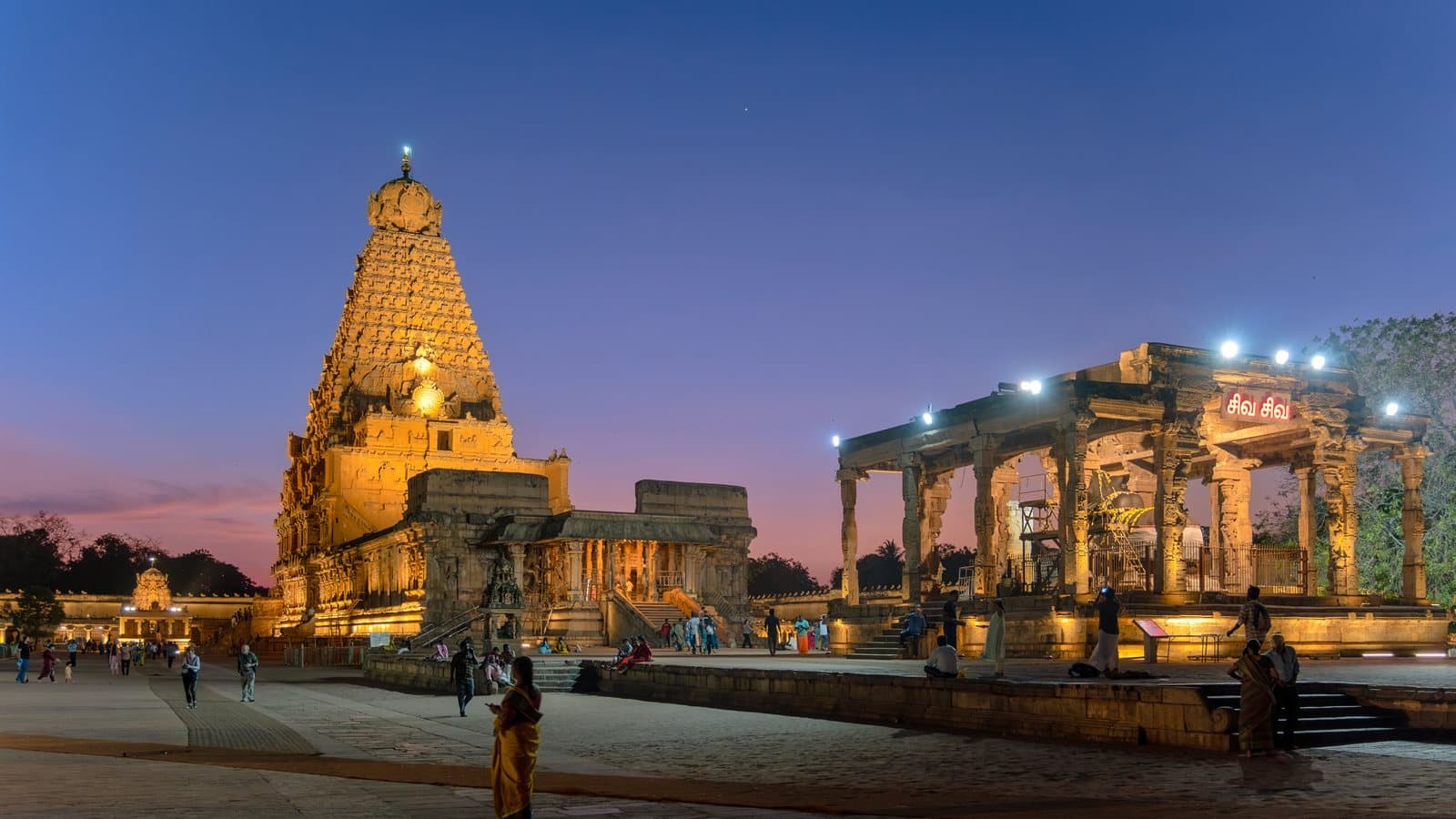
- At Brihadeeswara Thanjavur, the great vimana and prakaram are illuminated with thousands of clay deepams; the cultural programme includes Carnatic vocal, Bharatanatyam, and Nagaswaram concerts.
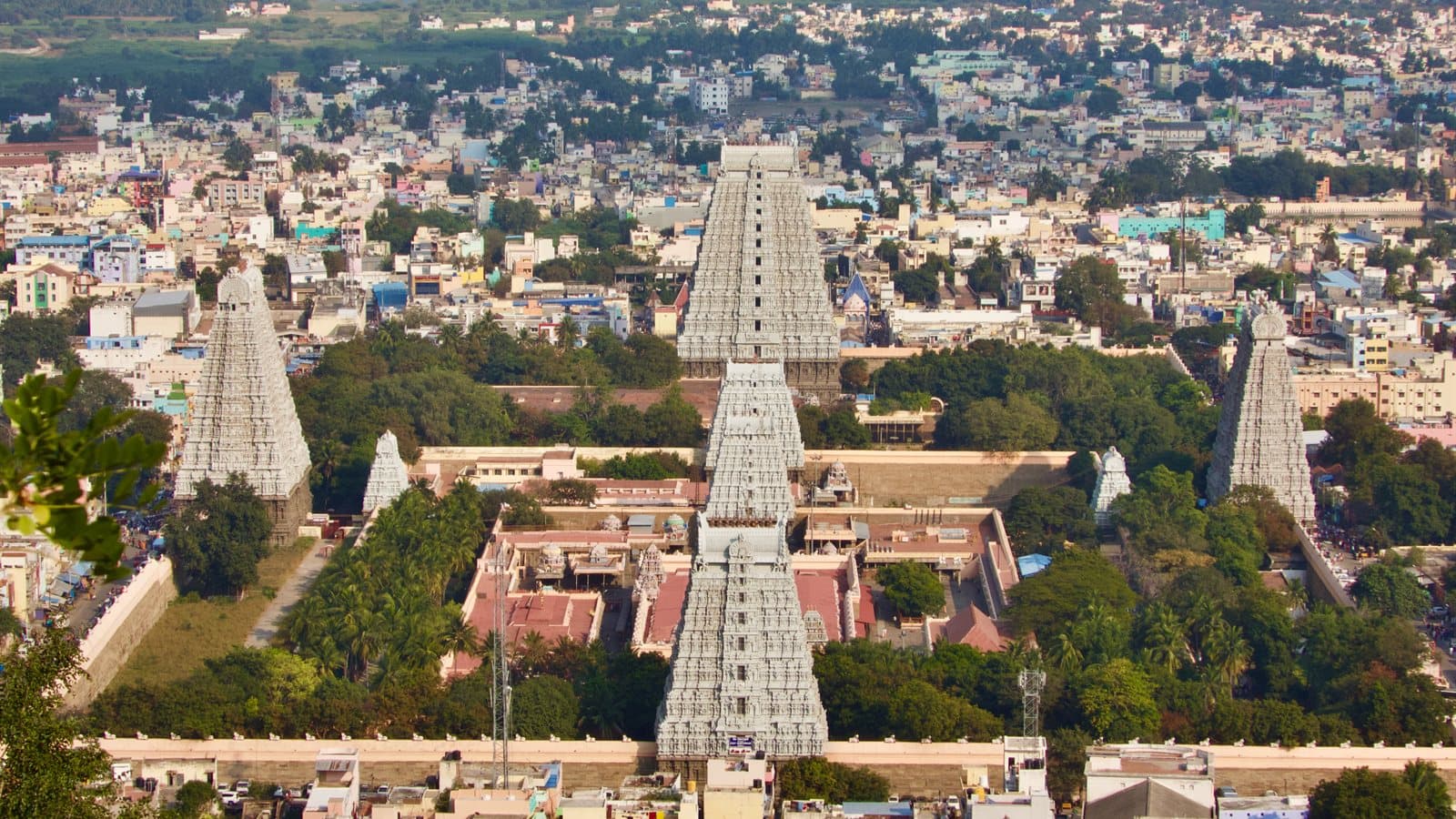
- At Arunachaleswarar Thiruvannamalai, the Mahadeepam atop the Annamalai hill is lit at twilight, visible for 30 km.
- At Ramanathaswamy Rameswaram, the 22 sacred theerthams are bathed in by devotees through the day.
- Many homeowners observe the vrat at home: keep a Shivalingam (or photo) before you, light a lamp, fast, and chant through the night.
When & Where
For Devotees
If you attend a temple Shivaratri, arrive by 5 PM and plan to stay through the full night to witness all four prahara abhishekams — leaving partway is considered to break the vrat. Carry a shawl (temple floors are cold), water, fruit, and a small mat to sit on. The middle prahara (midnight) is often the most spiritually charged. If observing at home, set up a simple altar: a Shivalingam (or photo), a small lamp, bilva leaves, vibhuti. Chant Om Namah Shivaya, read or listen to the Sri Rudram, and try to stay awake the whole night. Breaking the fast the next morning with a small meal of fruit and curd-rice is traditional.